Summer 25% discount on all last year's products home decor

How to Choose the Right Mattress for Your Sleeping Position

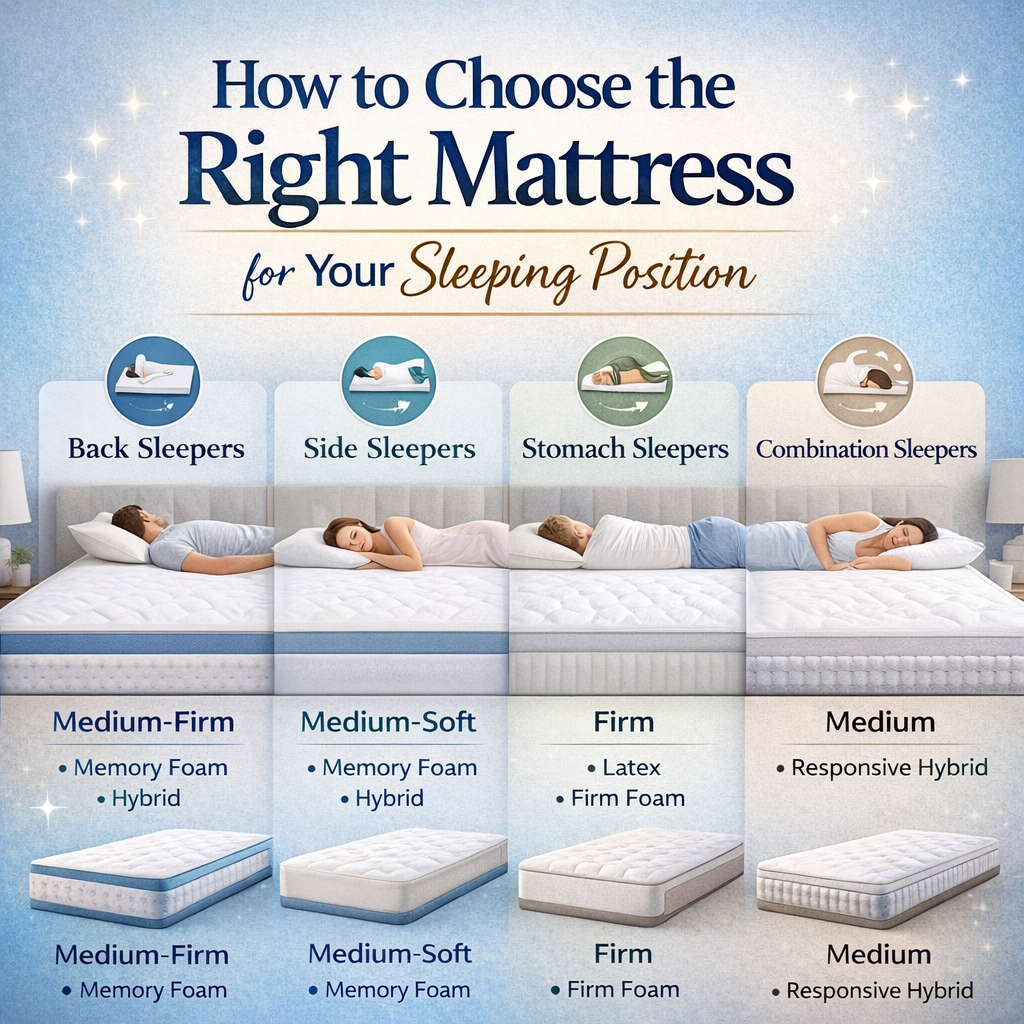
Choosing the right mattress isn’t just about comfort—it’s about supporting your body the right way while you sleep. Every sleeper has a unique sleeping position, and the wrong mattress can lead to back pain, stiffness, poor posture, and restless nights. Whether you sleep on your back, side, stomach, or switch positions throughout the night, selecting a mattress that matches your sleeping style is essential for quality sleep.
In this guide, we break down how different sleeping positions affect your body and how to choose the right mattress for each one.
1. Why Sleeping Position Matters When Choosing a Mattress
Your sleeping position determines how your spine aligns, where pressure builds up, and how well your body relaxes during the night. A mattress that doesn’t suit your position can strain muscles and joints without you realizing it.
Key factors influenced by sleeping position:
-
Spinal alignment
-
Pressure relief at shoulders, hips, and lower back
-
Weight distribution
-
Overall sleep comfort
For example, a mattress that feels perfect for a back sleeper may feel too firm for a side sleeper. Understanding your natural sleeping posture is the first step toward choosing a mattress that truly supports your body.
2. Best Mattress for Back Sleepers
Back sleepers need a mattress that maintains the natural curve of the spine while supporting the lower back. Too soft, and the hips sink; too firm, and pressure builds in the lower back.
Ideal Mattress Type:
-
Medium-firm to firm
-
Memory foam, hybrid, or orthopedic mattress
Why It Works:
-
Keeps spine aligned
-
Prevents sagging at hips
-
Provides balanced support
Recommended Features:
-
Zoned support layers
-
Lumbar support technology
-
Responsive comfort foam
Back sleepers benefit most from mattresses that offer firmness with a slight contouring feel.
3. Best Mattress for Side Sleepers
Side sleepers place the most pressure on shoulders and hips. A mattress that is too firm can cause discomfort and numbness, while one that’s too soft may throw the spine out of alignment.
Ideal Mattress Type:
-
Medium-soft to medium
-
Memory foam or hybrid
Why It Works:
-
Cushions shoulders and hips
-
Reduces pressure points
-
Keeps spine straight
Recommended Features:
-
Plush comfort layers
-
Pressure-relieving foam
-
Good motion isolation
Side sleepers should prioritize comfort and contouring over firmness.
4. Best Mattress for Stomach Sleepers
Stomach sleeping can strain the neck and lower back if the mattress is too soft. The goal is to keep the body lifted and aligned.
Ideal Mattress Type:
-
Firm to extra-firm
-
Latex, firm foam, or spring mattress
Why It Works:
-
Prevents hip sinkage
-
Keeps spine neutral
-
Reduces back pain
Recommended Features:
-
Strong core support
-
Minimal plush layers
-
Breathable materials
If you sleep on your stomach regularly, firmness is crucial for long-term comfort.
5. Best Mattress for Combination Sleepers
Combination sleepers change positions throughout the night, so they need a mattress that adapts quickly without disturbing sleep.
Ideal Mattress Type:
-
Medium to medium-firm
-
Hybrid mattress
Why It Works:
-
Balanced support and comfort
-
Easy movement
-
Responsive surface
Recommended Features:
-
Responsive foam or pocket springs
-
Edge support
-
Motion isolation
Combination sleepers benefit from versatility and responsiveness rather than extreme softness or firmness.
Final Thoughts
Choosing the right mattress for your sleeping position is one of the smartest investments you can make for your health and comfort. A well-matched mattress:
-
Improves spinal alignment
-
Reduces body pain
-
Enhances sleep quality
-
Boosts energy and focus
When shopping for a mattress, always test different options in-store, lie down in your natural sleeping position, and give yourself time to feel the support.


